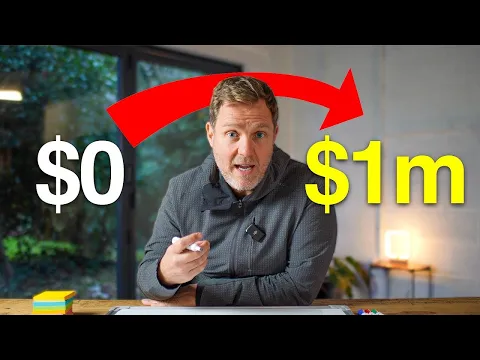
30 Years of Business Knowledge in 2hrs 26mins
Simon Squibb, Simon Squibb Channel, >16,000,000 views
BUSINESSNEW
2/26/20263 min read
About this video
Simon Squibb is a British entrepreneur, investor, viral content creator, and Sunday Times bestselling author who went from being homeless at 15 to founding and exiting multiple companies, including selling his Hong Kong agency Fluid to PwC, and now leads HelpBnk with a mission to help 10 million people start businesses.
Many founders assume staying small and local is safer. This talk argues the opposite: building across markets and designing for scale is often the only way to reduce risk, attract investment, and avoid becoming trapped inside your own business.
Full Video at the end of page
Key takeaways
Core Insight (Plain English)
Many small businesses assume staying local or staying small is safer. The argument here is the opposite: constraining a business to one market or keeping it intentionally small actually increases risk and limits long-term growth.
If a company depends on a single market, one downturn can wipe it out. Expanding into multiple markets spreads risk and creates more opportunities for growth.
The same logic applies to company size. Many founders accidentally trap themselves in small businesses where they personally run everything, cannot afford senior talent, and cannot step away from the day-to-day. Ironically, once a company grows larger and hires stronger leadership, it can become easier to run.
The broader message: build with scale and resilience in mind — not just survival in a single market.
For founders, this often means:
Exploring international markets earlier than expected
Using models like partnerships or franchising to expand without heavy capital
Designing a business that can grow beyond the founder
In short: growth is not just about ambition — it’s about reducing fragility in the business model.
7 Practical Operator Lessons
(For SME Leaders)
1. A single market creates hidden risk
If your revenue depends entirely on one geography, one downturn can damage the whole business. Expanding to multiple markets spreads that risk.
In Southeast Asia this is common: a business built only for one city or one country often hits a ceiling quickly.
2. Global expansion is easier than most founders assume
Many founders think going global means opening offices and spending heavily. In reality, the first step is simply researching where your product could work in other markets.
Even if you don’t expand immediately, knowing these opportunities helps attract investors, partners, or sponsors. You can also grow through licensing or franchising, where someone else runs the business in another market under your brand.
The key idea: you don’t always need to expand yourself to grow globally.
3. Use partnerships or franchising to expand without heavy cost
If you don’t want to run operations in another market, someone else can run it under your brand.
Licensing or franchising allows expansion while another operator carries the operational load.
For SMEs in the region, this could look like:
Distribution partners
Licensed training programs
Franchise service models
4. Staying small can trap the founder
A very small business often depends entirely on the founder.
When that happens:
You cannot hire experienced leadership
You cannot step away
You cannot scale the company properly
Ironically, larger companies with teams and systems can become easier to run.
5. Think about scale early — even if you don’t expand immediately
Even if you don’t launch internationally today, knowing where the product could work gives you strategic options later.
It also signals ambition and market potential to investors.
6. Marketing is more than ads — it’s the experience
The Starbucks example illustrates this. Early Starbucks treated store locations and employee culture as marketing, not just advertising.
For operators, that means:
Customer experience is marketing
Staff culture shapes brand perception
Physical presence can be brand building
7. Create a simple story that people want to talk about
Instead of relying only on ads, do something unexpected but relevant to your business that creates a clear story. In the example, the speaker bought a staircase being auctioned simply because it was unusual enough to attract media attention — which then opened the door to talk about his company.
The lesson: a simple, interesting story can travel further than traditional advertising.
Summary & Reflections
The ideas here are useful, but they come with trade-offs.
Not every business should go global quickly. Expansion adds complexity: regulation, culture, logistics, and management challenges.
For many SMEs, the practical takeaway is not immediate global expansion, but designing the business so expansion is possible. In Southeast Asia especially, the opportunity is often regional rather than global — expanding from one country to neighbouring markets where customer behaviour is similar.
The real risk may not be staying small. The real risk is building a business model that only works in one place or only works if the founder is doing everything.
Who should watch the full video
The ideas here are useful, but they come with trade-offs.
Not every business should go global quickly. Expansion adds complexity: regulation, culture, logistics, and management challenges. For many SMEs, the practical takeaway is not immediate global expansion, but designing the business so expansion is possible.
In Southeast Asia especially, the opportunity is often regional rather than global — expanding from one country to neighbouring markets where customer behaviour is similar. The real risk may not be staying small. The real risk is building a business model that only works in one place or only works if the founder is doing everything.
Until next time,
The SME Signal editorial Team