From $0 to $14 BILLION - The Success Principles That Built an Empire
Ray Dalio, Foundr, > 273,000 views
BUSINESSNEW
2/26/20263 min read
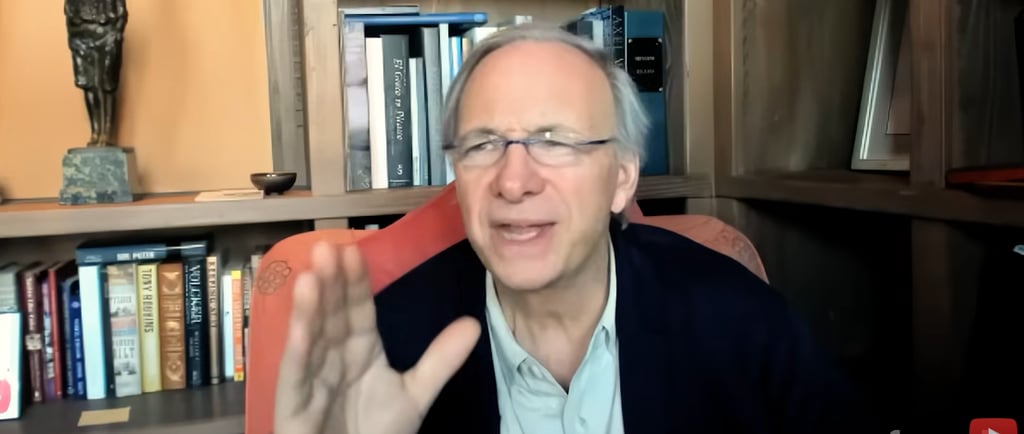
About this video
Ray Dalio is a legendary billionaire investor and philanthropist, founder of Bridgewater Associates—the world’s largest hedge fund managing over $100 billion—which he grew from his apartment into a global powerhouse, and bestselling author of Principles: Life & Work.
Most founders think success is about being right. This conversation challenges that idea — arguing that real progress comes from painful mistakes, honest reflection, and building teams that openly disagree to make better decision
Full Video at the end of page
Key takeaways
Core Insight (Plain English)
Many founders think success comes from being right. The deeper argument here is that progress comes from being wrong — and reflecting on it properly.
“Pain plus reflection equals progress” isn’t a motivational line. It’s an operating system. Mistakes are inevitable. The real edge comes from writing them down, stress-testing your thinking, inviting disagreement, and systematising better responses next time.
The goal is not ego protection. It’s decision quality.
Struggle is unavoidable. Struggle well.
7 Practical Operator Lessons
(For SME Leaders)
1. Write Down Your Decision Rules
Don’t just react to problems. After a tough situation, document:
What happened?
What did I assume?
What would I do differently next time?
Turn recurring mistakes into written principles. Over time, this becomes your internal playbook.
Many SMEs in Southeast Asia operate on intuition. Intuition is useful — but written principles scale better when your team grows.
2. Hire for Values First, Not Skills
Most founders hire for skill because it’s visible.
The sequence should be:
Values (are they aligned with the mission?)
Abilities (how do they think?)
Skills (what can they currently do?)
In tightly networked markets like Singapore, Malaysia, Indonesia or Vietnam, reputation compounds. Misaligned values cost more than weak skills.
3. Build Complementary Thinking Styles
Visionaries usually lack detail discipline.
Detail operators usually lack big-picture imagination. Don’t hire clones. Hire complements.
Use personality profiling seriously — not as HR theatre. Understand how people think so frustration becomes coordination instead of conflict
4. Separate Ego from Decision-Making
“The probability of you being right all the time is dumb.”
Create environments where disagreement is safe.
Encourage people to stress-test your ideas.
In many Asian cultures, hierarchy suppresses disagreement. That weakens decisions. Thoughtful disagreement is a competitive advantage.
5. Increase Output Per Hour, Not Hours Worked
Work-life balance is often framed as a trade-off.
The sharper move: increase leverage.
Bring in capable people. Delegate with trust. Spend one hour aligning, let others execute fifty hours well.
Productivity is not about squeezing time. It’s about multiplying impact.
6. Control Risk While Chasing Upside
After a major failure and losing money, the shift wasn’t to avoid risk — it was to manage downside better.
For SME operators:
Diversify revenue streams.
Avoid overexposure to one client.
Keep cash buffers.
Assume downturn cycles will come.
Especially in ASEAN markets where currency, political and global trade risks exist.
7. Build Meaningful Relationships, Not Just Profits
Money has no intrinsic value — it buys value.
The durable reward is meaningful work + meaningful relationships.
Companies that last decades behave more like mission-driven communities than transactional machines.
Summary & Reflections
This framework is powerful — but not easy.
Radical transparency can fail in immature teams. Open disagreement can destabilise fragile cultures. Writing principles requires discipline most founders abandon under pressure.
Also, not every failure is a “lesson” if capital runs out.
The practical takeaway is moderation:
Reflect systematically.
Invite disagreement selectively.
Manage downside carefully.
Grow capability before scaling culture experiments.
Struggle well — but survive first.
Who should watch the full video
This is worth watching if you are:
A founder moving from 5 to 50 employees
A second-generation family business leader professionalising operations
An SME owner struggling with team alignment and decision bottlenecks
An operator scaling from hustle mode to structured execution
Especially relevant for ASEAN founders transitioning from intuition-driven management to principle-driven systems.
If you're early in the journey, this helps you avoid avoidable pain.
If you're mid-stage, it helps you institutionalise lessons.
Until next time,
The SME Signal editorial Team
